Your home holds you through rushed mornings, quiet evenings, and everything in between. When your space feels heavy, cluttered, or chaotic, your body and mind often echo that same feeling. When home feels soft, supportive, and calm, it becomes easier to breathe a little deeper, move a little kinder, and care for yourself with more intention.
Home wellness isn’t about a picture-perfect house. It’s about creating a living environment that gently supports your physical, emotional, and mental well-being—using what you have, where you are, one small shift at a time.
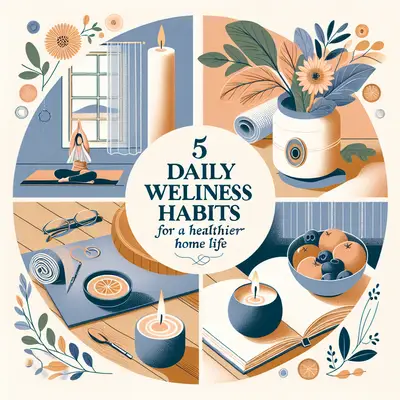
Below are five simple daily touchpoints that invite more ease into your space and your body. Treat them as gentle options, not obligations. Choose what feels doable today and let the rest wait for another time.
1. Begin and End With One Clear Surface
Your environment constantly sends signals to your nervous system. Visual clutter can quietly nudge your brain into “on alert” mode, while a calm, clear spot can act like a visual exhale.
Choose just one small surface—like a nightstand, a side table, or a section of your kitchen counter—and let it become your “daily clear space.” It doesn’t need to be perfect; it just needs to be intentional.
Each morning or evening, give yourself 3–5 minutes to:
- Remove trash, dishes, or anything that doesn’t belong there.
- Gently wipe or dust the surface.
- Add one soothing object: a book, a candle, a small plant, or a photo that makes you feel at ease.
This single clear space becomes a visual reminder that calm is possible, even when the rest of the house feels busy. Over time, you might find it easier to extend that sense of clarity to other corners of your home—and, naturally, to your thoughts as well.
2. Invite Your Senses to Relax (Without Overwhelming Them)
Your senses are the doorway between your body and your surroundings. A house that is too bright, too noisy, or filled with strong scents can make it harder to unwind, even when you’re “off” for the day.
Try gently tuning your space with your senses in mind:
- Sight: During the day, open curtains or blinds to let in natural light where possible; in the evening, switch on softer, warmer lamps instead of bright overhead lights. Natural light can help regulate your sleep–wake cycle, while gentle evening light prepares your body for rest.
- Sound: Lower background noise when you’re able. If silence isn’t available or feels uncomfortable, consider soft instrumental music or nature sounds. Quiet soundscapes can help reduce stress levels and support focus.
- Smell: Choose gentle scents. You might simmer citrus peels and cinnamon on the stove, open a window for a few minutes of fresh air, or use a lightly scented candle. Keep fragrance subtle to avoid irritation, and be mindful of sensitivities in your household.
- Touch: Notice how fabrics and textures feel on your skin. Soft blankets, breathable bedding, and comfortable clothing can signal safety and rest to your nervous system.
You don’t need to transform every room. Start with one area where you spend a lot of time—your bed, your favorite chair, or the kitchen—and ask, “What one small sensory shift would feel more soothing here?”
3. Create a Gentle Movement Moment in Your Home
Wellness at home isn’t just about how your space looks—it’s about how your body feels as you move through it. Long periods of sitting or staying in one room can leave you feeling stiff, foggy, or low-energy.
Choose one short movement ritual that fits naturally into your day and connect it to something you already do at home. For example:
- After making your morning tea or coffee, stand at the counter and slowly roll your shoulders, gently stretch your neck, and circle your wrists.
- When you walk down the hallway, pause once to reach your arms overhead, lengthen your spine, and take two deeper breaths.
- Before bed, sit on the edge of your mattress and lightly stretch your legs and ankles, noticing the feeling of the sheets and the support beneath you.
These moments don’t have to be intense or long to be meaningful. Think of them as small “movement bookmarks” in your day, reminding your body that it is allowed to adjust, reset, and release tension—even in the middle of everyday routines.
If you share your home with others, you might invite them to join you, turning a few minutes of gentle stretching into a simple family or household ritual.
4. Nourish Your Day With a Calm Corner for Meals
How and where you eat at home can deeply influence how your body digests and how satisfied you feel. Eating on the couch, in front of screens, or while multitasking can lead to rushing through meals and missing your body’s signals.
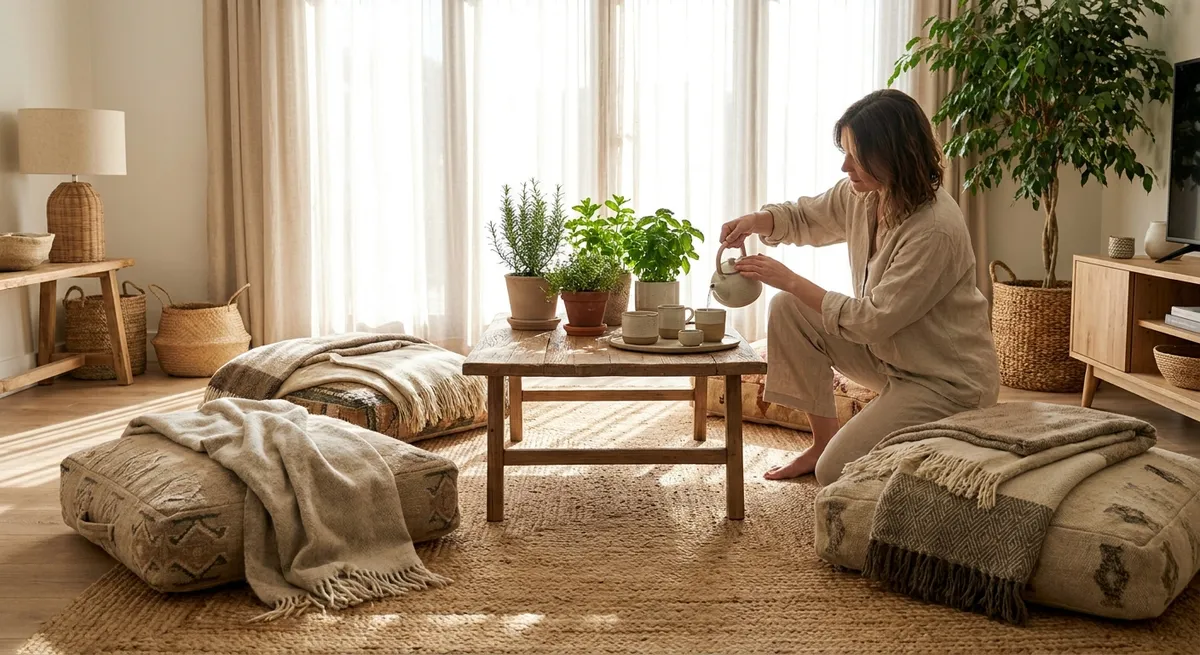
Choose one place—no matter how small—to be your “calm meal spot.” It might be:
- A cleared section of the kitchen table
- A tray at the coffee table with your phone set aside
- A chair by a window with a small side table
When it’s time to eat, try practicing a slower, more present approach:
- Take one or two steady breaths before your first bite.
- Notice the colors, textures, and temperature of your food.
- Put utensils down between bites occasionally, allowing your body to catch up to your mind.
You don’t need to eat every meal this way. Even choosing one meal or snack a day to enjoy more intentionally can help you reconnect with hunger and fullness cues, reduce mindless snacking, and turn nourishment into a grounding daily pause.
5. Close the Day With a Gentle Home-Body Check-In
Evenings often slip by in a blur of chores, screens, and fatigue. Creating a soft closing ritual that ties together your home and your inner world can help your body recognize that it’s time to wind down.
Consider a short nightly check-in that touches both your space and your well-being:
Tend to One Small Thing in Your Space
This might be folding a blanket, washing two dishes, or placing shoes by the door. The goal isn’t a spotless house; it’s a small act of care that signals, “I’ve done enough for today.”
Tune Into Your Body
After that tiny task, pause in a comfortable spot and ask yourself: - Where do I feel tired? - Where do I feel tense? - What feels okay or even good right now?
You might place a hand on your chest or stomach, take a few slow breaths, and simply notice without trying to fix anything.
Offer One Simple Comfort Before Bed
This could be sipping warm herbal tea, dimming the lights 30 minutes earlier, reading a few pages of a book, or lightly stretching. Choose one thing that feels kind and sustainable—not another item on a to-do list.
This closing ritual doesn’t have to be long or elaborate; even five minutes can create a sense of gentle completion. Over time, your body may begin to associate these small patterns with safety and rest.
Conclusion
Home wellness is less about redesigning your space and more about softening your experience within it. Clear one small surface. Soften one sensory input. Add one gentle movement. Create one place to eat with presence. End the day with one small act of care.
Your home does not need to be perfectly tidy or tranquil to support your health. It only needs a few intentional touchpoints that remind you: you are allowed to slow down here, to breathe here, and to care for yourself in ways that feel real and reachable.
Let these ideas be invitations, not instructions. Pick one that feels comforting today and let it meet you exactly where you are.
Sources
- U.S. Environmental Protection Agency – Indoor Air Quality – Overview of how indoor environments affect health and well-being.
- Harvard T.H. Chan School of Public Health – Healthy Buildings – Research on how building and home environments influence physical and mental health.
- Centers for Disease Control and Prevention – Sleep and Sleep Hygiene – Guidance on environmental and behavioral habits that support restorative sleep.
- Harvard Health Publishing – The Importance of Stretching – Explains how gentle movement practices can improve comfort and reduce tension.
- National Institute of Diabetes and Digestive and Kidney Diseases – Eating, Diet, & Nutrition – Discusses how eating patterns and habits influence digestion and overall health.
Key Takeaway
The most important thing to remember from this article is that this information can change how you think about Home Wellness.