
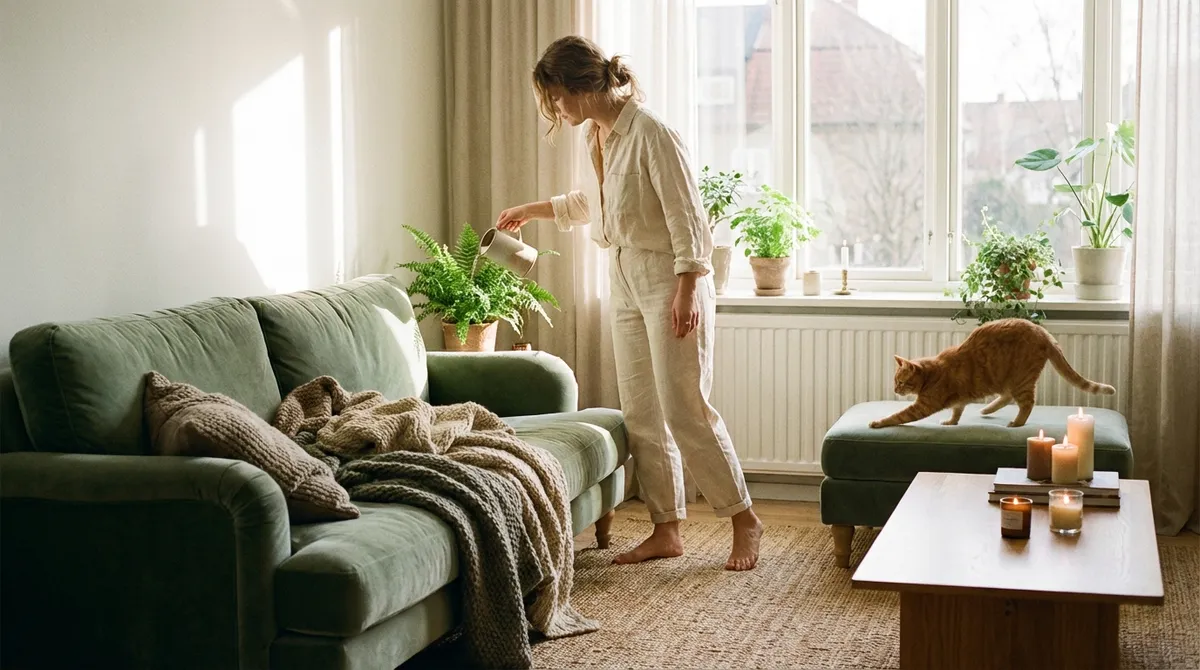
Your home holds the quiet power to either drain you or restore you. Even small, tender shifts in how you care for your space can become a daily exhale for your body, mind, and spirit. You don’t need a full renovation or a picture-perfect room—you just need a few intentional choices that help your home feel more like a soft place to land.
This guide offers five gentle, home-centered wellness practices you can weave into your days. Think of them as tiny anchors that help you feel steadier, calmer, and more supported by the space you live in.
Turning Your Home Into a Supportive Wellness Partner
Home wellness isn’t about spotless counters or matching furniture; it’s about how your space feels and how it supports your nervous system, sleep, and daily rhythms.
When you walk through your door, your senses start gathering information: light, sound, smells, clutter, temperature. Your body responds before you even process what you’re seeing. A dim, stuffy, noisy, or chaotic room can keep your nervous system on high alert. On the other hand, a space with light, airflow, soothing sounds, and a bit of order can send your body the message: “You’re safe. You can soften now.”
By intentionally shaping your home environment, you give your body more chances to unwind throughout the day. Your living space becomes less of a backdrop and more of a quiet companion supporting your wellbeing.
Gentle Daily Tip #1: Start and End the Day With a 5-Minute “Reset Ritual”
Instead of trying to “keep the whole house clean,” focus on two tiny bookends to your day: a morning reset and an evening reset.
In the morning, choose one small action that helps your space greet you kindly—opening blinds, making the bed, or clearing the nightstand. This simple ritual can cue your brain that the day is beginning with a bit of grounded intention, not chaos.
In the evening, pick one corner or surface to reset: the kitchen sink, coffee table, or a single chair that collects clutter. Set a gentle timer for five minutes, move slowly, and breathe as you go. You’re not aiming for perfection, just a shift from “overwhelming” to “more peaceful than before.”
Over time, these tiny resets create a sense of predictability and order that can calm your mind and make your home feel more nurturing, especially when life outside feels busy or uncertain.
Gentle Daily Tip #2: Invite Natural Light and Fresh Air Into Your Routine
Your body’s internal clock—the circadian rhythm—is deeply affected by light and air. When your home supports that rhythm, sleep often improves, energy feels steadier, and your mood tends to soften.
Each morning, open curtains or blinds as early as you comfortably can. If possible, stand by a window for a minute or two, looking outside while you breathe deeply. This small ritual sends a clear wake-up signal to your body and can help regulate your sleep-wake cycle.
When weather and air quality allow, crack a window for a few minutes during the day. Even short bursts of fresh air can shift how a room feels and help lower indoor air pollutants. If you’re sensitive to outdoor allergens or live in a high-pollution area, consider using an air purifier or adding a few low-maintenance plants. You’re not striving for perfection—just a little more freshness, a little more light, a little more ease.
Gentle Daily Tip #3: Create One Tiny “Rest Corner” Just for You
You don’t need a dedicated room to have a nurturing space. A single chair, a small section of the couch, or even a spot on the floor with a cushion can become your daily “rest corner.”
Choose one place in your home and quietly assign it a job: This is where I go to slow down. Add one or two soft elements—a throw blanket, a comfy pillow, or a warm lamp. Keep something calming within reach: a favorite book, a journal, knitting project, or a cup of tea.
Visit this corner at least once a day, even for three minutes. Sit, feel where your body meets the chair or floor, and take a few deeper breaths than usual. With repetition, your nervous system begins to associate that spot with safety and rest, making it easier to drop into calm each time you sit there.
Gentle Daily Tip #4: Soften the Soundscape of Your Home
The sounds around you affect your stress levels more than you might realize. Constant noise—from TVs, notifications, traffic, or household appliances—can keep your body in a subtle state of alertness.
Begin noticing your home’s sound environment at different times of day. Are there simple ways to soften it? You might lower the volume of background TV, turn off nonessential notifications, or choose one “quiet hour” daily where no media plays.
You can also add sounds that soothe you: gentle instrumental music, nature sounds, or a white noise machine if outside noise is beyond your control. The goal isn’t silence; it’s a kinder soundscape—one that supports focus when you need it and signals unwinding when it’s time to rest.
Gentle Daily Tip #5: Anchor Hydration and Nourishment Into Your Space
Your home can quietly remind you to care for your body throughout the day. Rather than relying on willpower alone, set up your space to gently nudge you toward hydration and balanced nourishment.
You might keep a glass or water bottle in the area where you spend the most time, refilling it each morning as part of your daily reset. Place a small bowl of nourishing snacks—like nuts, fruit, or cut-up vegetables—in a visible, easy-to-reach spot, rather than hiding them behind less supportive options.
In the kitchen, consider prepping one simple, grounding item most days: a pot of soup, a batch of roasted vegetables, or washed greens. The act of preparing food, even in small ways, is a message to yourself: I am worth the time it takes to be nourished.
Conclusion
Home wellness doesn’t require a total lifestyle overhaul. It lives in the gentle, repeating choices you make each day: opening a window, resetting one surface, sitting in your rest corner, softening the noise, refilling your water.
As you weave these practices into your routine, notice how your body feels when you step into your space. Over time, your home can become not just where you live, but a steady, quiet ally in your healing and daily wellbeing.
Sources
- Centers for Disease Control and Prevention – Healthy Home - Overview of how home environments influence health and wellness
- U.S. Environmental Protection Agency – Indoor Air Quality - Information on indoor air quality, ventilation, and fresh air in the home
- Harvard T.H. Chan School of Public Health – Healthy Buildings - Research on how building environments affect physical and mental health
- National Institutes of Health – Light and Sleep - Discussion of how light exposure impacts circadian rhythms and sleep
- Mayo Clinic – Stress Management: Relaxation Techniques - Explains calming practices that can be integrated into at-home rest rituals
Key Takeaway
The most important thing to remember from this article is that this information can change how you think about Home Wellness.