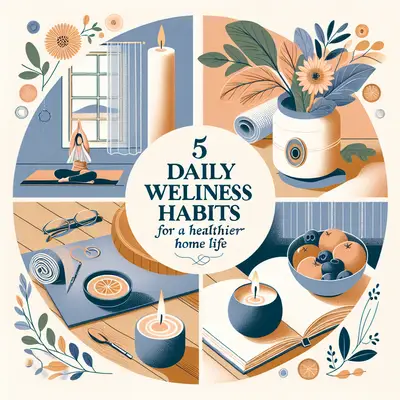

Your home holds you in ways you may not always notice. The light that softly enters in the morning, the chair you gravitate toward when you’re exhausted, the sounds and scents that greet you at the door—all of these moments quietly shape your nervous system, your sleep, your energy, and even your digestion. Home wellness isn’t about perfection or a full renovation. It’s about small, loving shifts that help your body exhale and remember what “okay” feels like again.
This gentle guide walks you through simple, doable ways to let your home care for you—so you’re not the only one doing the caretaking.
Let Light Lead: Inviting Natural Calm Into Your Spaces
Light is one of the most powerful (and overlooked) wellness tools in a home. It sets your circadian rhythm, influences hormones like melatonin and cortisol, and can shift your mood in minutes. The goal isn’t a magazine-perfect bright space, but a rhythm of light that supports your body across the day.
In the morning, try opening curtains or blinds as one of your first small rituals. Even 10–15 minutes of daylight exposure—sitting by a window with your tea, stretching near the sliding door, or simply pausing by the balcony—can help anchor your internal clock and gently wake your body without jolting it. If you live in a darker climate or wake before sunrise, a warm “sunrise” lamp or dimmable light can soften the transition from sleep to wakefulness.
As the day moves on, notice how artificial lights affect your senses. Overhead lighting can be harsh and stimulating; consider turning on a table lamp instead, or using warmer bulbs in the spaces where you unwind. In the evening, lowering the intensity of light helps send your brain the signal that it’s time to slow down. Think of light as you would volume: bright and open when you need energy, gentle and low when you’re seeking rest.
Clear Just One Surface: A Kind Approach to Everyday Clutter
Clutter can quietly tug at your nervous system—each pile a tiny reminder of something unfinished. But big decluttering projects can feel overwhelming, especially when you’re already tired. Instead of focusing on an entire room, choose just one surface that you see every day and let that be your “breathing space.”
It might be your nightstand, the kitchen counter by the sink, a coffee table, or the small entryway table where everything seems to land. Your only task: keep that single surface clear enough that your body relaxes when you see it. This isn’t about rigid rules or spotless minimalism; it’s about giving your eyes and brain a place to rest.
You can make this feel tender rather than punitive. Turn on a calming playlist, set a 5- or 10-minute timer, and simply sort what you see: trash, donate, put away, or “later” (a small basket or box is fine). When the timer ends, you’re done—even if the surface isn’t perfect. Over time, this one clear area becomes a visual cue of care. It whispers, “There is order here. You’re allowed to rest.”
As this single-surface habit settles in, you may gently add another: a chair that doesn’t collect laundry, the bathroom sink area, or the shelf you see when you first wake up. Let each space be a small, practical kindness to your future self.
Create a Soft-Body Corner: A Home for Rest and Regulation
Your home can hold a dedicated place for your nervous system to soften—a corner that tells your brain, “Here, we slow down.” You don’t need an entire room or expensive decor. A soft-body corner is simply a spot arranged with your comfort and regulation in mind.
Choose a place that already feels somewhat safe: a corner of your couch, a part of your bedroom, a chair by a window. Add elements that invite your body to unclench: a supportive pillow, a throw blanket, a warm light source, maybe a small basket with items you find soothing (like a journal, hand cream, a favorite book, or noise-canceling headphones).
What matters most is what you do in this space. Let it be where you practice tiny daily wellness moments that are easy to keep: three slow breaths before checking your phone, a few gentle stretches after work, five minutes of quiet before bed. Over time, your body begins to associate that corner with safety and restoration. This makes it easier to drop into calm, even on harder days.
If you live with others, you can gently communicate that this is your “soft corner”—a place where interruptions are minimized when possible. Even if that boundary isn’t perfect, naming it can help you and those around you honor your need for pause.
Nourish Within Reach: Making Supportive Choices the Easy Ones
The way your home is arranged can make nourishing choices feel natural instead of forced. You don’t need a perfectly organized pantry or color-coded fridge—just a few simple shifts that bring care a little closer to eye level.
In your kitchen, place the foods you’d like to reach for more often where they’re easiest to see and grab: a bowl of fruit on the counter (if it won’t go to waste), pre-washed veggies at the front of the fridge, a clear container of nuts or seeds where you usually stand to make tea. You’re not restricting anything else; you’re just making supportive options visually prominent.
You can extend this idea to hydration by placing a favorite glass or water bottle in the spaces where you spend the most time: by your work area, near your reading chair, or on your bedside table. At home, these small cues can nudge you toward gentle, consistent care without willpower battles.
Meals themselves can also become tiny home rituals. You might choose one meal a day to eat sitting down—no phone, no multitasking, just a few moments of presence with your food and your breath. Even if it’s a simple snack, this can turn eating from a rushed task into a quiet act of nourishment.
Use Sound and Scent to Gently Shift Your Mood
The sounds and scents in your home travel straight to your nervous system. They can either keep you in a state of low-level stress or invite your body into a steadier, more grounded place.
For sound, consider what your home usually “sounds like” throughout the day. If silence feels unsettling, you might experiment with soft instrumental music, nature sounds, or gentle ambient tracks to create a cocoon-like atmosphere. If your home is normally noisy—traffic, neighbors, kids, devices—look for small windows of intentional quiet. Even five minutes of stillness in your soft-body corner can feel unexpectedly restorative.
Scents can also be powerful, but they don’t have to be elaborate. A favorite candle, simmering citrus and cinnamon on the stove, a drop of essential oil on a cotton pad, or simply the fresh air that comes from opening a window can all change how your body feels in a space. Some people find certain scents grounding (like lavender, vanilla, or cedar), while others feel best with very mild or no scents at all. Trust your own body’s feedback.
You might choose one “evening scent” and one “morning sound” that bookend your day: perhaps a calming playlist after dinner and a fresh, brighter scent (like citrus) in the late morning when you need a reset. Over time, these consistent sensory cues become gentle signals to your body: now we wind down, now we rise.
Conclusion
Home wellness isn’t about getting everything “right” or turning your space into a showroom. It’s about asking a quiet, compassionate question: How can my home help me feel a little more held? With small, repeatable shifts—welcoming morning light, clearing one surface, claiming a soft-body corner, arranging nourishment within reach, and tending to sound and scent—you create an environment that supports healing instead of hurry.
You deserve a home that doesn’t just look liveable, but feels livable in your body: a place where your shoulders can drop, your breath can deepen, and you can remember that rest is not something you have to earn. It’s something your home can gently offer you, day after day.
Sources
- National Institutes of Health – Circadian Rhythms - Explains how light exposure affects sleep, hormones, and daily body rhythms
- Harvard Health Publishing – Blue Light Has a Dark Side - Discusses how evening light impacts melatonin and sleep quality
- Mayo Clinic – Stress Management: Understand Your Triggers - Provides insight into how environmental factors, like clutter and noise, can influence stress levels
- Cleveland Clinic – Aromatherapy: Do Essential Oils Really Work? - Reviews the evidence behind scent, mood, and relaxation
- Stanford University – The Power of Music on the Brain - Explores how music influences mood, stress, and cognitive states
Key Takeaway
The most important thing to remember from this article is that this information can change how you think about Home Wellness.