Your home holds you in ways you may not always notice. The colors you see when you first open your eyes, the sounds that greet you in the kitchen, even the way light lands on your favorite chair—these quiet details are constantly speaking to your nervous system. When you begin to see your home as a gentle ally in your well-being, small daily choices can add up to a space that steadies your body, softens your mind, and reminds you that you are safe to rest and grow.
This isn’t about a perfect house. It’s about creating a kinder relationship with the place you live, using simple daily rituals that support your health from the inside out.
Creating a Calmer Corner for Your Nervous System
One of the most powerful wellness tools you can offer yourself at home is a dedicated “calm corner”—a place your nervous system starts to associate with exhaling, softening, and feeling a little more okay. This doesn’t need to be an entire room; a single chair, a spot near a window, or a corner of the bedroom can be enough.
Choose a space with the least clutter and the most natural light, if possible. Add a few elements that feel soothing to your senses: a soft blanket, a supportive pillow, a plant, a warm lamp instead of harsh overhead lighting. Each day, spend a few minutes here with a simple grounding practice—like placing one hand on your chest and one on your belly, taking slow breaths, or simply noticing five things you can see, four you can feel, three you can hear.
Over time, this corner becomes a cue to your nervous system that you are safe. Even on busy or difficult days, touching that familiar blanket or sitting in that same spot helps your body remember what calm feels like. This is less about “doing it right” and more about consistency: a few minutes, most days, in a space that feels like a quiet yes to your well-being.
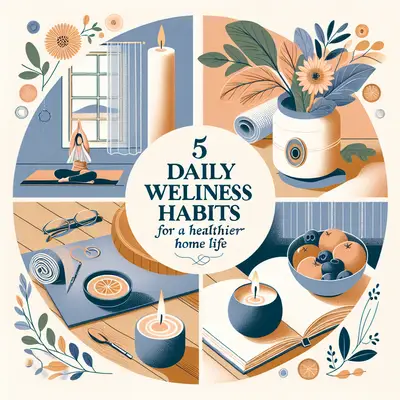
Daily wellness tip #1: Visit your calm corner for 3–5 minutes a day, even if you do nothing but breathe and look around.
Letting Light and Air Support Your Mood
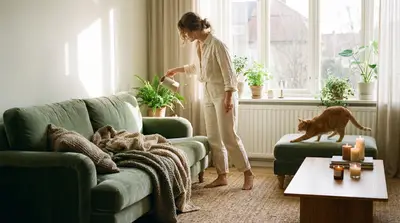
Light and fresh air are gentle but powerful anchors for daily wellness at home. Morning light, in particular, helps regulate your internal clock, supports more restful sleep at night, and can brighten your mood. Even on cloudy days, opening your curtains or blinds and letting outdoor light touch your eyes (without looking directly at the sun) helps your brain understand that the day has begun.
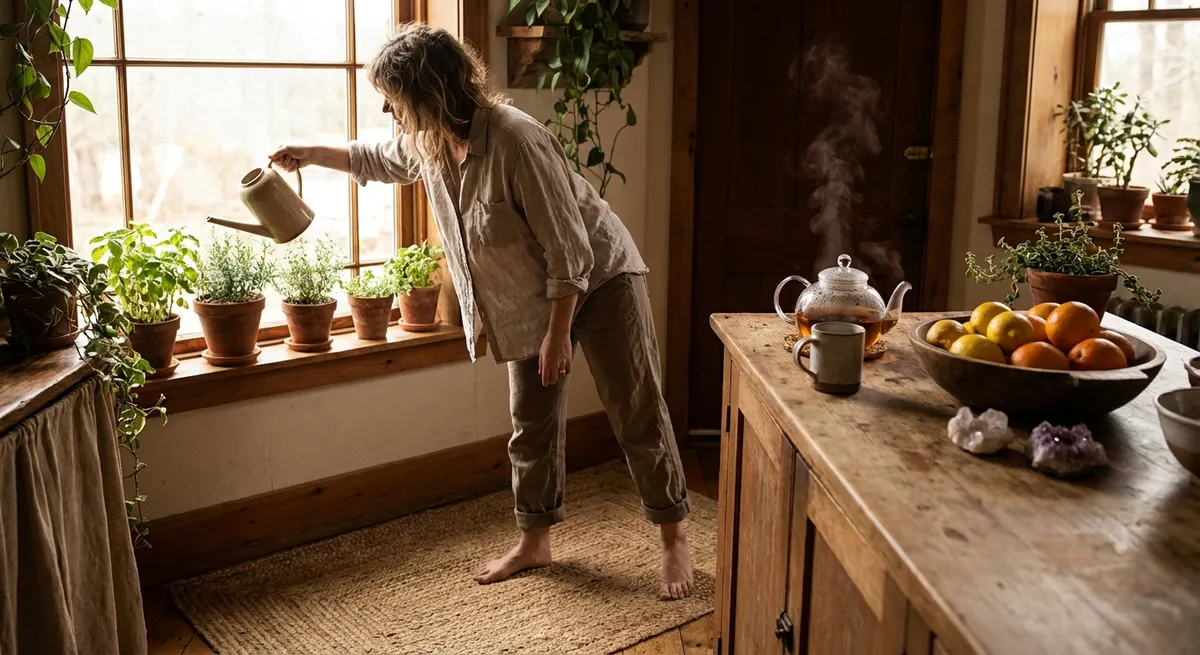
Pair this with a simple air-clearing ritual: open a window for a few minutes once or twice a day, if weather and air quality allow. This brief exchange of air can make a room feel more alive and may help reduce stale odors and indoor pollutants. If you live in a place where opening windows isn’t always possible, consider using an air purifier or adding hardy houseplants that can gently support indoor air quality.
You can also pay attention to your evening light. As bedtime approaches, begin dimming lights and switching from bright, cool-toned bulbs to warmer, softer ones. This shift tells your body it is time to wind down, supporting natural melatonin production. Over time, these small adjustments create a home rhythm that works with your biology instead of against it.
Daily wellness tip #2: Open your curtains and a window (if safe) within an hour of waking, and dim lights an hour before bed to support your sleep-wake cycle.
Clearing Just Enough Clutter to Help You Breathe Easier
Clutter can quietly tug on your attention, making it harder to relax, focus, or fall asleep. But big decluttering projects can feel overwhelming—and sometimes that stress cancels out the benefits. Instead of aiming for a perfectly tidy home, you can focus on a few gentle, repeatable habits that keep your space feeling more breathable than burdensome.
Choose one small zone that you touch every day: your bedside table, kitchen counter, desk, or entryway. Decide on a simple rule for that area, such as “only what I use daily lives here” or “this surface is clear by bedtime.” At the same time each day—maybe while your tea steeps or just before you brush your teeth—spend just two minutes putting things away or tossing what you no longer need.
This “little and often” approach helps your brain stop seeing your home as a never-ending project. Instead, it starts to feel like a series of tiny, doable acts of care. You might be surprised how much calmer a room feels when even one surface is consistently clear. It sends a quiet message: there is space for you here.
Daily wellness tip #3: Choose one surface in your home to keep consistently clear with a two-minute tidy each day.
Gentle Movement That Fits Naturally Into Your Home
You don’t need a home gym or a formal workout routine to invite more movement into your day. Your home is already full of opportunities to support your body in small, sustainable ways that protect your joints, strengthen your muscles, and help your mind release tension.
Start by noticing the transitions you already have: getting out of bed, making coffee, brushing your teeth, walking to another room. You can attach micro-movements to these: stretching your arms overhead before you stand, rolling your shoulders while the kettle boils, doing a few slow calf raises while you brush your teeth, or pausing in a doorway for a gentle chest stretch.
If you work from home or spend a lot of time sitting, choose one spot—a hallway, a balcony, or a clear patch of floor—as your “movement lane.” A few times a day, stand up and walk that lane for one or two minutes, add some slow neck rolls or hip circles, or practice sitting and standing from a chair without using your hands. These tiny breaks improve circulation, refresh your focus, and invite your body to participate more fully in your day, without turning movement into an all-or-nothing task.
Daily wellness tip #4: Pair one daily activity (like boiling water or brushing your teeth) with a 1–2 minute stretch or movement ritual.
Using Sound and Scent to Soothe Your Senses
The sounds and smells in your home shape your inner landscape more than you might realize. A television humming in the background, a constantly buzzing phone, or harsh synthetic scents can keep your nervous system slightly on edge. With a few intentional choices, you can turn sound and scent into gentle supports for relaxation and focus.
Begin by noticing: what do you hear in your home right now? What do you smell? Without judgment, simply observe. Then ask yourself: what would feel more soothing or supportive? You might experiment with soft instrumental music while you cook, an ambient sound playlist while you work, or a few moments of quiet in the evening to let your nervous system reset from the day’s noise.
For scent, consider simpler, cleaner options—like simmering citrus peels and cinnamon on the stove, opening a window, or using natural essential oils with caution (especially if you have pets, allergies, or sensitivities). Research suggests that certain scents—like lavender or chamomile—may support relaxation for some people, but your experience is what matters most. Choose one scent that feels comforting and reserve it for restful times, such as evenings or your calm corner, so your brain begins to associate that aroma with safety and ease.
Daily wellness tip #5: Create a short “sensory reset” once a day—turn down screens, put on gentle sounds you enjoy, and add a simple, calming scent or fresh air for a few minutes.
Conclusion
Home wellness isn’t about having a picture-perfect space—it’s about creating a place that helps you feel more like yourself. With a calm corner to ground you, light and air that support your natural rhythms, just enough tidiness to help you breathe easier, tiny movements woven into your routines, and sound and scent that soothe rather than stress, your home becomes an active partner in your health.
You don’t need to implement everything at once. Choose one daily tip that feels approachable and let it settle into your routine. Over time, these small, loving gestures toward your space and your body can create a home that quietly reminds you, again and again: you are worth caring for.
Sources
- National Institutes of Health – Light, Sleep, and Circadian Rhythms – Overview of how light exposure influences sleep and the body’s internal clock
- Centers for Disease Control and Prevention – Physical Activity Basics – Explains health benefits of regular movement and ideas for incorporating more activity into daily life
- Harvard Health Publishing – Relaxation Techniques – Discusses breathing and relaxation practices that help calm the nervous system
- Environmental Protection Agency – Indoor Air Quality – Provides information about indoor air quality and simple steps to improve it at home
- Mayo Clinic – Aromatherapy: Is It Worth Trying? – Reviews the potential benefits and considerations for using scent and essential oils for wellness
Key Takeaway
The most important thing to remember from this article is that this information can change how you think about Home Wellness.