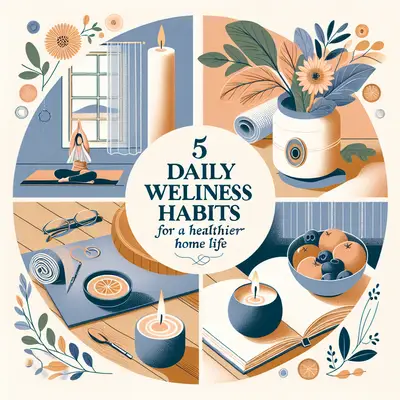
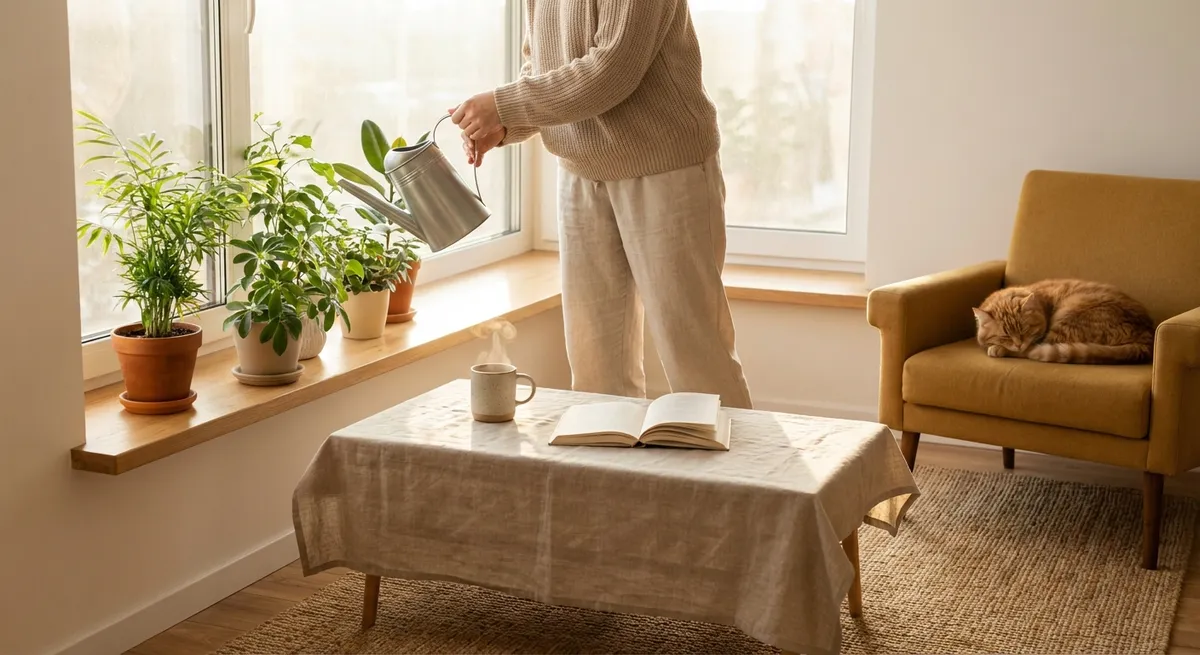
Your home holds you in ways you may not always notice. The light that reaches your eyes first thing in the morning, the sounds that meet you at the door, the way your body feels when you finally sit down—all of it quietly shapes your nervous system, energy, and mood. You don’t need a perfect space or a full renovation to feel better where you live. A few gentle, repeatable choices each day can slowly transform your home into a place that truly cares for you back.
In this guide, you’ll find five daily home wellness touches—small, compassionate shifts that are realistic for real life. Think of them as invitations, not obligations. Try one, adapt it to your reality, and let your home become a steady partner in your health, instead of another item on your to‑do list.
1. Begin and End the Day With One “Soft Corner”
You don’t need an entire peaceful house; you just need one corner that feels kind to your body and mind. This might be a chair by a window, a spot at the kitchen table, or a small space on the floor with a pillow and blanket. The intention is to have a predictable, comforting place where your nervous system can relax a little, even if the rest of your home is busy or cluttered.
Each morning, spend a few minutes in this corner before diving into your day. You might sip water or tea, take three slow breaths, or simply notice the light and sounds around you. In the evening, return to the same spot for a brief “closing ritual”—turn off a bright light, stretch gently, or write down a single thing that went well. Over time, your body learns: “Here, I can soften,” and that association alone can support calmer sleep, steadier mood, and a more grounded start to your day.
2. Let Natural Light and Darkness Guide Your Rhythm
Your home’s light is constantly talking to your body—even when you’re not aware of it. Natural morning light helps set your internal clock, supports more restful sleep at night, and can lift mood. In the evening, softer light tells your brain it’s time to unwind. You don’t have to overhaul your lighting to benefit; just a few intentional shifts can make a measurable difference.
If possible, open blinds or curtains not long after waking, and spend a few minutes near a window or stepping just outside if you can. During the day, keep at least one area gently sunlit rather than relying solely on overhead lighting. After sunset, gradually dim your environment: switch from bright overhead lights to lamps, close curtains, and turn down screen brightness. These small changes help your body produce melatonin more naturally, which may support deeper rest, smoother energy, and a calmer evening atmosphere at home.
3. Build a Gentle Hydration Ritual Into Your Space
Hydration doesn’t have to be a discipline you “fail at”; it can be a kindness you build into your home. Instead of trying to remember to drink water all day, let your surroundings remind and support you. The goal is not perfection—just steady, compassionate care for your body’s basic needs.
Choose one or two anchor points in your home where you naturally pause: your bedside, your work area, the kitchen counter, or a favorite chair. Place a glass or water bottle there, and each time you pass or sit, take a few sips. You might prepare a carafe of water with lemon, cucumber, or herbs in the morning and keep it visible on the table. You can also pair hydration with an existing habit: sip while waiting for the kettle, before checking your phone, or as you start cooking. These consistent, low‑pressure cues help you nourish your body without turning it into another rigid rule.
4. Use Sound and Scent to Help Your Body Shift Gears
Your home can gently signal “work,” “rest,” or “play” through sound and scent—two powerful, often overlooked wellness tools. Instead of expecting your mind to instantly switch from stressed to relaxed, you can let your environment do some of that work for you. The key is consistency: using the same sensory cues over and over so your body starts to recognize them.
Choose a calming soundscape you enjoy: soft instrumental music, nature sounds, or even the hum of a fan. Reserve it for winding down, stretching, or reading. Likewise, select one or two simple scents—a candle, essential oil diffuser (used safely and sparingly), or a simmering pot of citrus and herbs. Use a specific scent for a specific purpose: perhaps lavender or chamomile when you’re preparing for sleep, citrus when you’re clearing the kitchen, or rosemary while you’re focusing. Over time, these consistent sensory patterns help your nervous system shift more easily between alertness and rest.
5. Make One Tiny Tidy a Daily Act of Care, Not Perfection
Clutter can feel overwhelming, especially when you’re already stretched thin. Instead of aiming for a spotless home, think in terms of small, repeatable “acts of care” that support ease. A gently tended space doesn’t mean everything is organized; it means there are a few key spots that feel just clear enough for you to breathe a little easier.
Choose one “wellness zone” to care for daily—perhaps your kitchen sink, bedside table, coffee table, or entryway. Spend 5–10 minutes giving that single area a reset at roughly the same time each day. Wash or load dishes, clear off the surface, fold the blanket, or sort the mail in just that spot. When done, pause and notice how your body feels in relation to this pocket of order. Knowing there is at least one calm, tended place in your home can reduce stress and create a sense of gentle control, even when the rest of life is messy.
Conclusion
Wellness at home isn’t about a perfect aesthetic or an ambitious routine. It’s about small, repeatable signals of safety and kindness that your body can trust. A soft corner that holds you, light that supports your rhythm, hydration woven into your day, soothing sounds and scents, and one tiny tidy space—each is a quiet way of saying to yourself, “You’re allowed to feel better here.”
Start with just one of these daily touches and let it become familiar. When it feels natural, add another, or adapt them to fit the rhythm of your real life. Over time, these gentle home rituals layer together into something powerful: a living space that doesn’t just house you, but steadily nourishes you.
Sources
- National Institutes of Health – Biological Rhythms Fact Sheet – Explains how light and daily patterns influence circadian rhythms and overall health.
- Centers for Disease Control and Prevention – Sleep and Sleep Disorders – Covers the importance of light exposure, evening routines, and environment for healthy sleep.
- Harvard Health Publishing – Blue Light Has a Dark Side – Discusses how evening light and screens affect melatonin, sleep quality, and circadian timing.
- Mayo Clinic – Water: How Much Should You Drink Every Day? – Provides guidance on daily hydration needs and factors that influence them.
- Princeton University – The Science of Clutter – Summarizes research on how visual clutter can affect attention, stress, and cognitive load.
Key Takeaway
The most important thing to remember from this article is that this information can change how you think about Home Wellness.