A well home doesn’t have to look like a magazine spread or feel like a wellness retreat. It’s simply a place where your body can soften, your mind can exhale, and your nervous system doesn’t have to work so hard. Home wellness is less about perfection and more about tiny, repeatable choices that help you feel a little more grounded, a little more nourished, and a little more yourself each day.
Let this be gentle: you don’t need to change everything. Even one small shift in your daily rhythm can create a ripple of comfort through your space and your body.
A Soft Start: One Intentional Breath Before the Day Begins
Before your feet touch the floor in the morning, give yourself one small moment of arrival. This doesn’t have to be a long meditation or a full morning routine. It can be a single, spacious breath that tells your nervous system, “We’re beginning slowly.”
As you wake, place a hand on your chest or belly and take a deep inhale through your nose, letting your abdomen gently rise. Exhale slowly through your mouth, as if you’re fogging a mirror. Notice the weight of your body on the bed, the temperature of the air, the softness (or not) of your sheets. This simple practice can ease you out of “alarm mode” and into a more regulated, responsive state.
Research on slow, deep breathing shows that it can support your parasympathetic nervous system—the “rest and digest” response that helps regulate heart rate and stress levels. Bringing this into your home as a daily touchpoint makes your bedroom more than just a place you sleep; it becomes a small sanctuary of nervous system care.
If you already wake up rushed, don’t push for ten minutes of calm right away. Begin with one slow breath. When that feels natural, you might stretch it into three breaths, or add a gentle stretch while you’re still under the covers. Think of this as laying down a tiny thread of calm that can grow over time.
Nourishing Corners: Creating a Calm Spot You’ll Actually Use
You don’t need an entire room for wellness; a single, thoughtfully tended corner can be enough. Choose a spot that feels accessible—beside your bed, a chair near a window, a small area at your kitchen table. The goal is not aesthetics; it’s comfort and consistency.
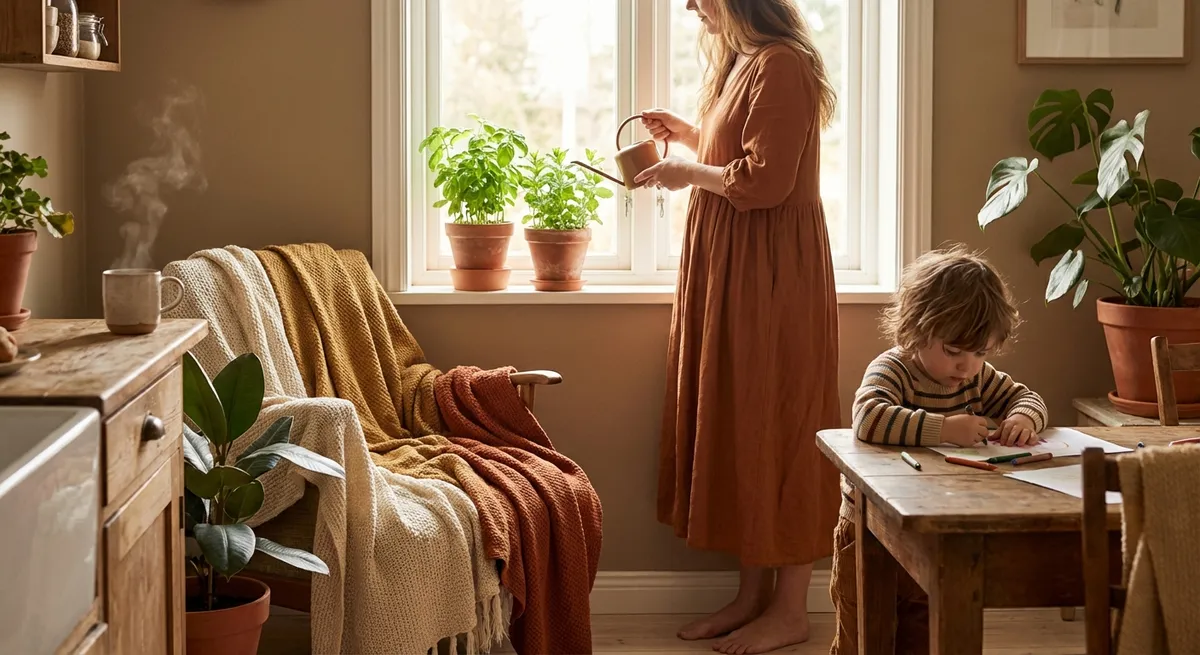
Add one or two items that help your body associate this space with ease: a soft blanket, a supportive cushion, a mug you love, or a small plant. Keep it simple so it doesn’t become another area you feel pressured to “keep perfect.” This space is a permission slip, not a project.
Decide on a gentle use for this corner: maybe it’s where you drink your morning tea without your phone, read a few pages of a book, stretch your shoulders, or practice a short breathing exercise. The repetition matters more than the duration—your brain learns to recognize this spot as a cue for slowing down.
Over time, this calm corner can act like a “reset button” in your day. When you feel scattered, stepping into this space—even for two minutes—reminds your body what it feels like to soften. In this way, your home begins to actively support your emotional regulation rather than just being a backdrop to your stress.
Steady Sips: Bringing Gentle Hydration Into Your Routine
Hydration is one of the quietest, most accessible forms of home wellness. It’s not glamorous, but it meaningfully affects energy, mood, digestion, and even how clearly you think. Instead of aiming for a perfect number of ounces, focus on making water easy, visible, and pleasant in your home.
Begin by choosing a glass or bottle you genuinely like using and keeping it in the spaces where you spend most of your time—on your desk, by the kitchen sink, or near your favorite chair. This simple visibility cue can gently remind you to drink without you needing to rely on willpower.
If plain water feels unappealing, you might experiment with adding a slice of citrus, a few cucumber rounds, or some herbs like mint. A warm mug of herbal tea in the evening can count toward your hydration while also supporting relaxation. Notice how your body feels on the days you remember to drink regularly—less foggy, fewer headaches, perhaps smoother digestion.
If it helps, tie hydration to existing home habits: a few sips when you enter the kitchen, a glass while you prepare meals, or a refill each time you return from the bathroom. By anchoring this practice to daily movements in your home, hydration becomes a natural rhythm instead of another item on your to-do list.
Gentle Movement: Let Your Home Invite Your Body to Uncurl
Home can easily become a place where we sit, scroll, and stay in one position for hours. Instead of forcing yourself into an intense workout routine, think about sprinkling small movements into the fabric of your day—tiny invitations for your body to uncurl and breathe.
Choose one or two daily “movement moments” that feel honest for your current energy level. This might be:
- A slow stretch while your coffee or tea brews
- Walking a few gentle laps around your home between tasks
- Rolling your shoulders and relaxing your jaw before you sit down with a screen
- Standing up and stretching each time you finish an email or a household chore
You can also use your furniture to support your body: a chair with good back support, a cushion for sitting on the floor, or a yoga mat kept visible in a corner as a reminder that stretching is welcome here. These visual cues can be powerful; they signal that movement belongs in your home, not just in gyms or classes.
Even a few minutes of movement can help improve circulation, ease stiffness, and support mood. Instead of measuring calories or steps, tune in to the subtler signs: Does your chest feel more open? Is your breath a bit deeper? Do your shoulders soften slightly? Let those sensations be your guide rather than strict rules.
Evening Downshift: Teaching Your Home to Help You Rest
Sleep doesn’t only begin when you lie down; it begins with the way your environment gently prepares you to let go. An “evening downshift” doesn’t have to be elaborate. Think of it as a small, repeatable signal to your body that the day is closing.
Choose a realistic time frame—maybe 20–30 minutes before bed—to soften the sensory load in your home. This might look like dimming overhead lights, turning off especially bright screens, and lowering the volume of background noise. Warm, softer light (from lamps or warm-toned bulbs) can help your body ease into its natural sleep rhythms.
If you can, create a tiny pre-sleep ritual: light stretching on the bedroom floor, a few pages of a gentle book, a gratitude list, or simply washing your face slowly with attention to the temperature and texture of the water. Allow this to be imperfect. Some nights it may be three minutes; other nights you might linger longer.
Keeping your bedroom as simple and soothing as your life allows can also support deeper rest. That might mean clearing just one surface (like your nightstand), using breathable bedding, or adjusting the room temperature to be slightly cooler. You don’t need to transform your entire space at once—small, steady shifts still count.
As you develop this evening rhythm, your body begins to recognize these cues as “time to unwind.” Over time, you may notice it becomes a bit easier to fall asleep, and your home starts to feel less like the place where you carry your stress and more like the place where you can gently set it down.
Conclusion
Home wellness lives in the small, repeatable choices you make in the spaces you already have. A single intentional breath in the morning, a cozy corner you actually use, a glass of water within reach, a few gentle stretches, or a softening of lights at night—none of these actions look dramatic from the outside, but together they slowly retrain your body toward ease.
You do not need a perfect home to support your health. You only need small pockets of intention and a willingness to meet yourself gently, exactly where you are today. As you experiment with these daily practices, notice which ones feel kindest to your nervous system, your schedule, and your energy. Those are the ones worth keeping—and letting your home tenderly hold for you.
Sources
- National Institutes of Health – The Science of Slow, Deep Breathing – Explores how slow breathing can influence the nervous system and stress response
- Centers for Disease Control and Prevention – Water & Hydration – Discusses the importance of drinking water for overall health and daily functioning
- Harvard Health Publishing – Importance of Sleep and Sleep Hygiene – Outlines how evening routines and environment affect sleep quality
- Mayo Clinic – Exercise: 7 Benefits of Regular Physical Activity – Details how even moderate movement supports physical and mental health
- Cleveland Clinic – How to Create a Relaxing Bedtime Routine – Provides guidance on establishing calming nighttime habits for better rest
Key Takeaway
The most important thing to remember from this article is that this information can change how you think about Home Wellness.