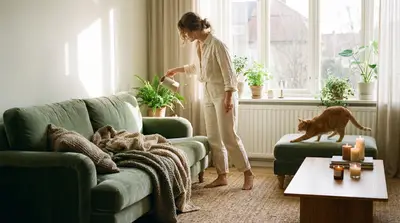
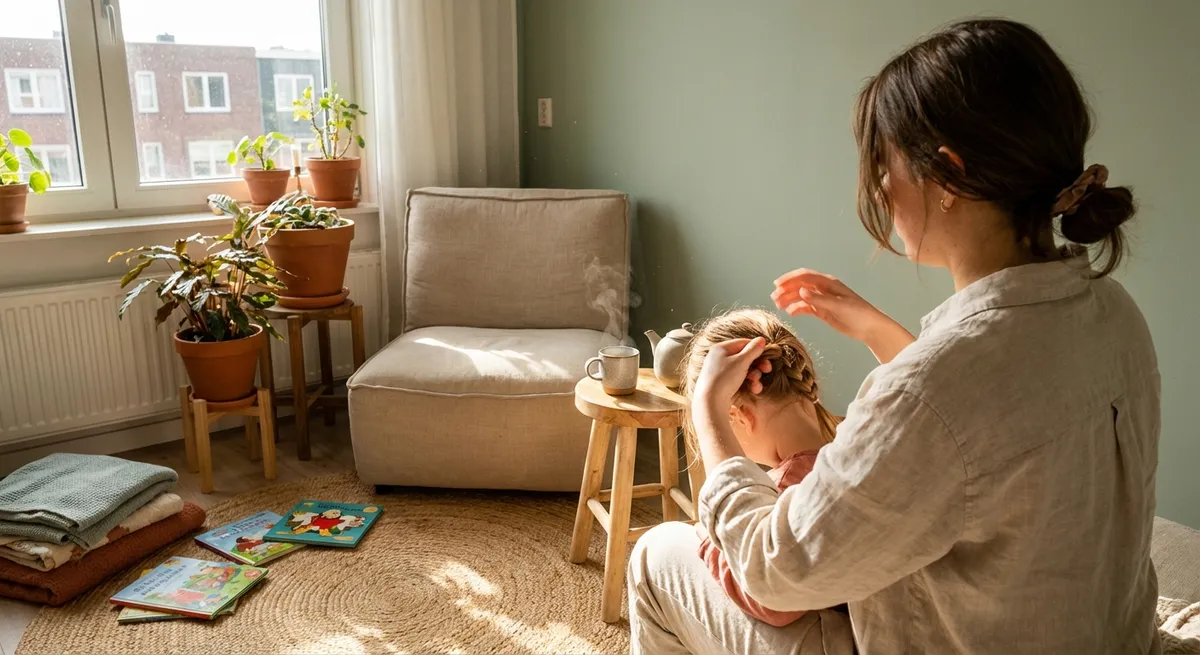
Your home holds you in ways you may not always notice. The chair you sink into at the end of the day, the light that filters through your windows in the morning, even the sound of your kettle can gently shape how your body and mind feel. Home wellness isn’t about perfection or expensive makeovers—it’s about small, intentional choices that help your space feel more like a soft landing and less like another to‑do list.
In this guide, we’ll explore simple, nurturing ways to support your well-being through your home. Along the way you’ll find five gentle daily practices you can start today—no renovation required.
Why Your Home Environment Matters for Your Well-Being
Your nervous system is always listening to your surroundings. Cluttered counters, harsh lighting, and constant noise can quietly keep your body in a state of low-level stress. By contrast, softer light, clearer surfaces, and comforting sensory cues can help signal to your body that it’s safe to exhale.
Research suggests that our physical environment can influence mood, energy levels, sleep quality, and even health behaviors. For example, visual clutter has been linked to increased stress and difficulty focusing, while natural light exposure can support healthier sleep-wake cycles and mood. Your home doesn’t have to look like a magazine to be supportive; it only needs to feel a bit more aligned with how you want to feel. When you treat your space as an ally in your wellness—rather than a project to “fix”—you make room for more ease, more rest, and more moments of quiet joy.
Tip 1: Begin and End the Day in One Gentle Spot
Choose a single place in your home—a chair by the window, a side of your bed, a cozy corner of the sofa—and let it become your “gentle spot.” This is not a productivity space; it’s a soft space. In the morning, spend a few minutes here before looking at your phone. In the evening, return for a brief wind‑down before bed.
Your morning moment might be as simple as placing your feet on the floor, noticing three slow breaths, and setting a kind intention for the day (“May I be patient with myself today”). At night, you might dim the lights, take a few stretches, or write down one thing you’re grateful for or proud of. By anchoring these small rituals to a single location, you create a physical cue for calm. Over time, your body will start to recognize this spot as a place where it can soften and reset, even on busier days.
Tip 2: Let Light Gently Support Your Body’s Rhythm
Light is one of the quiet ways your home can help regulate your body clock. When you first wake up, try to let in natural light as soon as you comfortably can—open the curtains, sit near a window, or step outside for a few minutes if possible. This early light exposure helps signal to your brain that it’s daytime, which can support more stable energy during the day and more restful sleep at night.
As the day moves into evening, gently shift your home’s lighting to match: fewer bright overhead lights, more warm lamps or softer bulbs. This doesn’t have to be elaborate. Simply turning off one harsh light and turning on a warmer lamp can make a difference. If screens are part of your evening, consider dimming them or using night-mode features. Think of light in your home as a quiet conversation with your nervous system: brighter and more open in the morning, softer and more cocooning as the day winds down.
Tip 3: Clear Just One Small Surface Each Day
Whole‑home decluttering can feel overwhelming, especially when life is already full. Instead, choose one small surface to care for each day: a nightstand, the corner of the kitchen counter, your coffee table, or the area by the front door. Your only task is to gently clear, wipe, and reset that single space.
This daily practice is less about tidiness for its own sake and more about offering your eyes and mind a place to rest. A clear patch of space can subtly reduce the feeling of mental overload. Over time, you may notice that this small habit ripples outward, making it easier to keep other areas more manageable without forcing yourself into a big, draining organizing project. Meet yourself where you are—some days “clear” might just mean stacking the mail instead of sorting it. That’s still a loving step toward a calmer home.
Tip 4: Invite Calming Sensations Into Your Space
Your home can soothe you through your senses—sight, sound, scent, touch, and even taste. You don’t need to transform everything at once; simply choose one sense to gently support each day.
You might:
- Keep a soft blanket or textured pillow within reach of your favorite chair
- Play gentle background sounds (rain, ocean, or quiet instrumental music) while you move through chores
- Light a candle or diffuse a scent you associate with relaxation, like lavender or vanilla
- Place one object you love where you’ll see it often—a photograph, a plant, a piece of art, or a small stone from a favorite walk
These little sensory touches send safety signals to your nervous system. Over time, you can experiment with which sensations feel genuinely calming rather than stimulating. Your goal isn’t to create a “perfect” aesthetic, but to shape a home that feels kind to your body and mind.
Tip 5: Build a Gentle Hydration Habit Into Your Space
Home wellness also includes the small ways you support your body throughout the day, and hydration is a simple, powerful one. Instead of relying solely on willpower, let your environment help you remember to drink water.
You could place a favorite glass or bottle in the places you spend the most time—next to your bed, by the sink, near your work area, or on a living room side table. Each time you enter that space, take a few sips. You might also pair this with another habit already in place: drink a glass of water while your coffee brews, after you brush your teeth, or when you turn off a light at night. These gentle cues within your home can turn hydration from another “should” into a natural rhythm that supports your energy, digestion, skin, and overall well-being.
Bringing It All Together: Let Home Be a Partner, Not a Project
As you explore these home wellness practices, remember that this is not an all‑or‑nothing journey. You don’t need a perfectly styled home, expensive tools, or elaborate routines. One clear surface, one softened light, one sipped glass of water, one calm corner is enough to begin.
Try choosing just one of these daily tips to experiment with this week. Notice how it feels in your body—not whether it looks impressive, but whether it brings a little more ease into your day. Home wellness grows from these small, repeatable acts of care. Over time, they weave together into a space that holds you more gently, and a life that feels just a bit kinder from the moment you wake up to the moment you rest.
Sources
- Harvard Health Publishing – Stress and your health – Explains how chronic stress affects the body and why calming environments can be protective
- Princeton University – Interactions of Top-Down and Bottom-Up Mechanisms in Human Visual Cortex – Discusses how visual clutter can impact attention and cognitive load
- National Institutes of Health (NIH) – Light and human health – Reviews how light exposure influences circadian rhythms, mood, and sleep
- Centers for Disease Control and Prevention (CDC) – Water & Healthier Drinks – Outlines the benefits of proper hydration for overall health
- Sleep Foundation – The Importance of Natural Light – Describes how light in the home environment affects sleep quality and daily energy
Key Takeaway
The most important thing to remember from this article is that this information can change how you think about Home Wellness.