
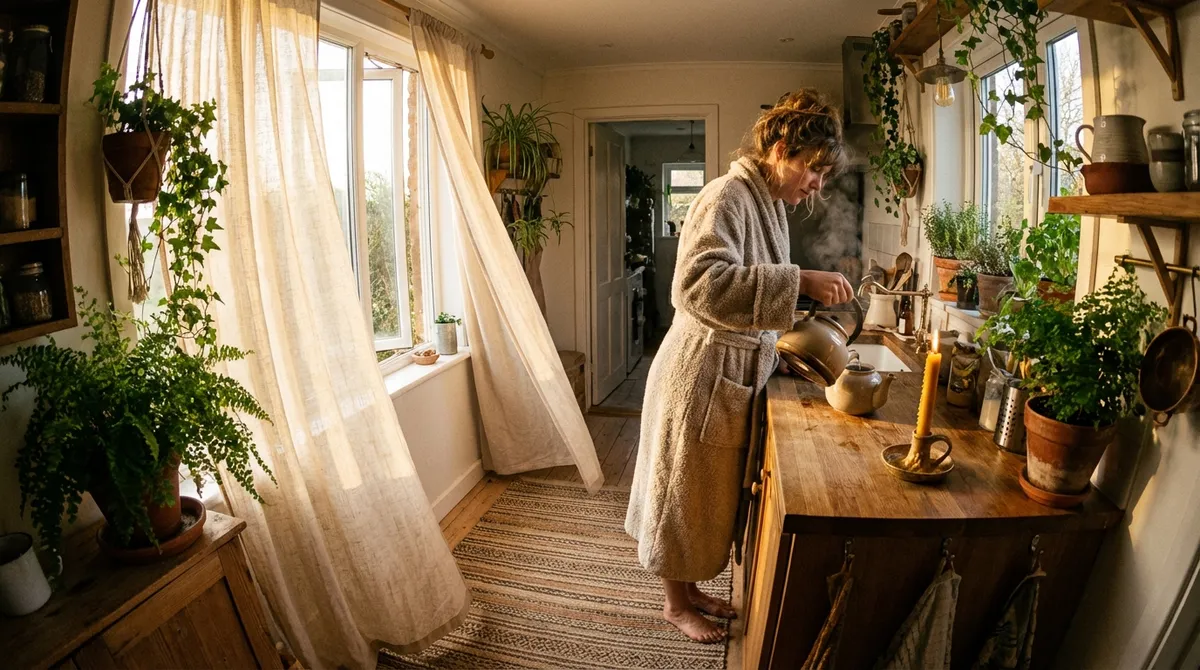
Your home doesn’t have to be perfect to support your wellbeing—it just needs to be kind to your nervous system. When your space feels a little more gentle, everyday life becomes a little more breathable. This isn’t about a full renovation or buying new things; it’s about small, repeatable rituals that quietly support your body, mind, and emotions right where you already live. Think of these practices as tiny, daily recalibrations that help your home feel like a soft landing place instead of another source of stress.
Below are five daily wellness tips you can weave into your home life. Move slowly. Choose one to experiment with this week and let it grow from there.
Tip 1: Begin and End the Day in One Calm Corner
You don’t need an entire room for peace—one small corner is enough. Choose a spot by a window, in a quiet hallway, or even the side of your bed. Add a soft touch: a pillow, a favorite mug, a small plant, or a lamp with warm light. Let this be the place where you pause for a few moments at the start and end of each day.
In the morning, spend a few slow breaths here before you look at your phone. You might place your feet on the floor, notice how your body feels, stretch your shoulders, or silently name one gentle intention for the day: “move slowly,” “drink water,” “say no when I need to.” At night, return to this same spot to “close” the day—maybe with a short stretch, a cup of herbal tea, or a quick journal line about one thing you handled well.
The repetition helps your brain associate this corner with safety and exhale. Over time, simply sitting there can signal to your nervous system that it’s okay to soften, even if the rest of your day has been loud or busy.
Tip 2: Let Light and Air Reset Your Mood
Light and fresh air are quiet, powerful tools for home wellness. Natural light helps regulate your body’s internal clock, which supports more balanced energy and sleep. Even on cloudy days, opening curtains or blinds can gently remind your body that it’s daytime, helping you feel more awake and oriented. If you don’t have much natural light, using softer, warmer lamps in the evening and brighter light earlier in the day can still create a supportive rhythm.
Each day, if possible, open at least one window for a few minutes, even in cooler weather. That brief exchange of air can make your space feel less stagnant and may help clear some indoor pollutants that accumulate from cooking, cleaning products, and everyday living. While the window is open, pause and notice the sound of the outside world—birds, distant traffic, wind in the trees. This moment of awareness connects you back to something bigger than your to‑do list.
If you work from home or spend long hours indoors, try shifting where you sit once or twice a day to catch a different angle of light. These gentle adjustments support your mood and energy without demanding major changes to your schedule.
Tip 3: Use Micro‑Tidying to Lower Background Stress
Clutter doesn’t make you a failure; it just asks a lot of your brain. When every surface is holding “unfinished decisions”—papers to sort, clothes to put away, dishes to clean—your mind keeps quietly tracking it all in the background. This can fuel exhaustion and irritability even when you’re not consciously thinking about it.
Instead of aiming for a spotless home, practice a simple “micro‑tidy” routine: two to five minutes, once or twice a day. Choose one tiny zone: the coffee table, your nightstand, the chair where you pile clothes. Set a short timer, and during that time, either put things back where they belong or decide on one small container, basket, or drawer where they can live for now.
End with a gentle sentence to yourself: “For today, this is enough.” The goal is not perfection; it’s to create one or two clearer spots that give your eyes and nervous system a break. Over time, these mini resets can make your home feel more navigable and less overwhelming without requiring a big burst of energy you may not have.
Tip 4: Turn Everyday Tasks Into Sensory Soothing
So much of home life is repetitive—washing dishes, folding laundry, wiping counters. Instead of seeing these tasks only as chores, you can gently reframe a few of them as opportunities for sensory comfort and grounding. You’re not adding more to your day; you’re simply doing what you already do with more awareness and kindness.
When you wash dishes, notice the temperature of the water, the scent of the soap, the sound of clinking plates. Let your attention rest on these sensations for a few breaths. While folding laundry, feel the textures of different fabrics and move more slowly than usual for a few items. When you wipe a table, move your hand in slow, circular motions and watch the surface become clear.
These moments pull your attention out of anxious thoughts and back into your body, which can calm a racing mind and support a steadier mood. You’re using what’s already in your day—water, fabric, movement—as simple tools to soothe your nervous system.
Tip 5: Create Gentle Cues That Support Your Health
Instead of relying on willpower, let your home quietly remind you of what you need. Small visual cues and arrangements can make healthier choices feel more natural and less like a struggle. When your space is set up to support you, you don’t have to fight yourself quite as much.
A few ideas:
- Keep a filled water bottle or glass in the place where you spend most of your time, so staying hydrated becomes easier to remember.
- Place a fruit bowl or healthy snack within easy reach and eye level, while putting more processed snacks slightly out of sight or in a closed cabinet.
- Roll up a yoga mat or keep a stretching strap or resistance band near the spot where you watch TV or scroll your phone, as a gentle nudge to move your body for a few minutes.
- Leave a book, journal, or puzzle near your bed and keep your charger a little farther away, so it’s simpler to choose a calming activity before sleep.
These aren’t rules—they’re invitations. Experiment with one or two cues and notice how your behavior shifts without harsh self‑talk. The point is to let your home quietly participate in your healing and wellbeing, instead of working against it.
Conclusion
Home wellness isn’t about creating a perfect sanctuary; it’s about building a space that meets you where you are and helps you soften, one small ritual at a time. A calm corner. A window opened for a few minutes. A tiny tidy spot. A mindful moment washing dishes. A gentle visual cue that nudges you toward what your body and mind truly need.
Start with one tip that feels doable and kind. Let it settle into your day without pressure to “get it right.” Over time, these small, repeatable choices can turn your home into a place that doesn’t just hold your life—but actively restores you, one quiet moment at a time.
Sources
- National Institutes of Health – Light, Sleep, and Circadian Rhythms - Explains how light exposure affects mood, sleep, and the body’s internal clock
- U.S. Environmental Protection Agency – Indoor Air Quality - Provides information on common indoor air issues and simple ways to improve air quality at home
- Harvard Health Publishing – Blue Light and Sleep - Discusses how light in the home environment, especially in the evening, can impact sleep and wellbeing
- Princeton University Neuroscience Institute – Clutter and Cognitive Load - Summarizes research on how visual clutter affects focus and mental processing
- Mayo Clinic – Stress Management and Relaxation Techniques - Outlines simple relaxation strategies that can be integrated into daily routines at home
Key Takeaway
The most important thing to remember from this article is that this information can change how you think about Home Wellness.