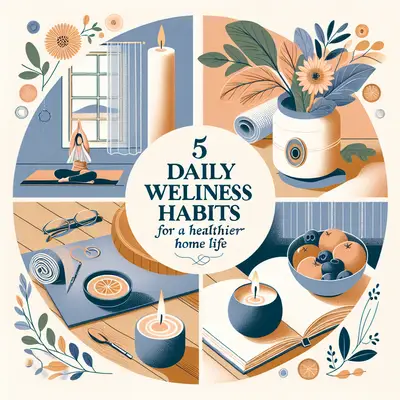
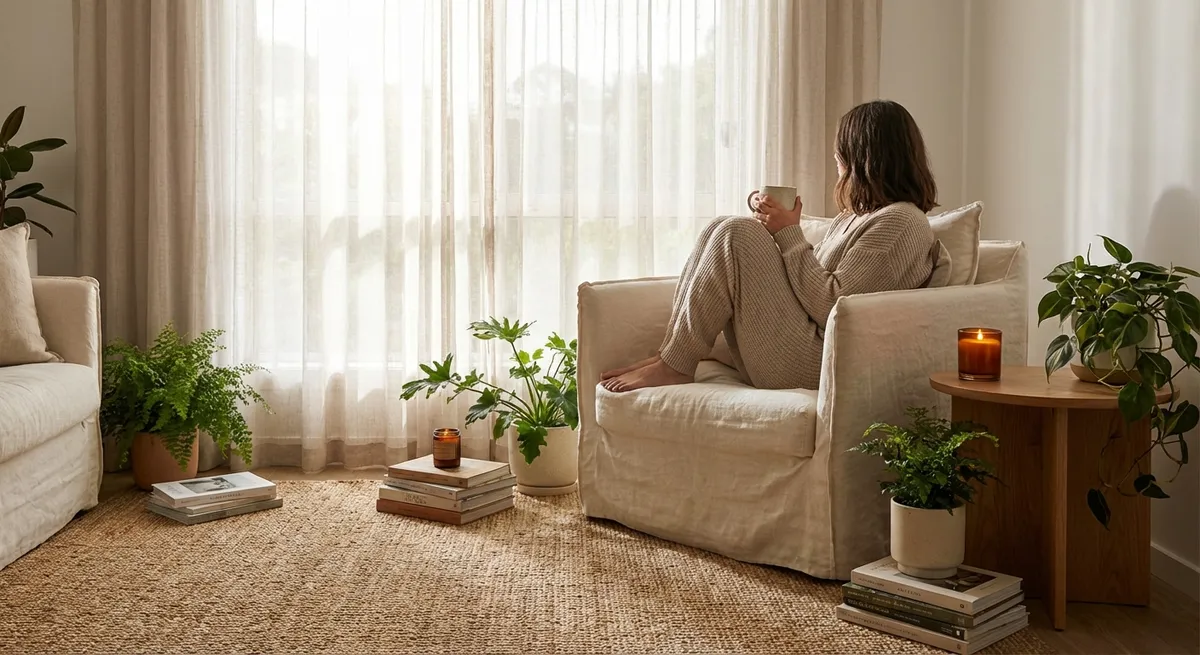
There is a quiet kind of healing that happens inside our homes—between the laundry, the dishes, and the evenings on the couch. Home doesn’t have to be picture-perfect to support your wellness; it simply needs to become a place where your body can unwind, your mind can soften, and your nervous system can remember what “safe” feels like. In this guide, we’ll explore five simple, nurturing daily practices that weave well-being into your living space and help you feel more grounded, calm, and cared for—right where you already are.
Making Space to Breathe: Clearing Just One Small Area
You don’t need a full house makeover to feel lighter; sometimes one tended corner is enough to shift your whole mood. Choose a small area—a nightstand, a desk, a coffee table, or even a single kitchen counter—and decide that this is your “breathing space.” Each day, spend 5–10 minutes clearing it, wiping it down, and arranging only what truly supports you: a glass of water, a favorite book, a calming candle, a plant, or a lamp with soft light.
This tiny practice is less about tidiness and more about signaling safety and order to your nervous system. Research links clutter with increased stress and difficulty focusing; by creating one calm surface, you offer your mind a place to rest. Over time, this small ritual becomes a daily exhale—a reminder that even on hectic days, you can create a pocket of peace within reach.
Daily Tip #1: Choose one small “breathing space” in your home and tend to it for a few minutes each day, treating it as a visual cue for calm.
Light, Air, and Your Mood: Tuning Your Home to Your Body’s Rhythm
Light and fresh air are quiet foundations of home wellness. Natural light supports your circadian rhythm, helping regulate sleep, energy, and even mood. Each morning, open your curtains or blinds and, if possible, a window—just for a few minutes—to invite in sunlight and a bit of fresh air. This simple act wakes up your space and gently wakes up you.
You can also soften your evenings with warmer, dimmer lighting. Around an hour before bed, turn off the brightest overhead lights and lean on lamps, salt lamps, or string lights to cue your body that it’s time to wind down. Light shapes your internal clock more than you might realize; tuning your home’s light to the time of day helps your body find a steadier rhythm.
Daily Tip #2: Each morning, let in natural light and fresh air for at least 5–10 minutes, and each evening, dim lights to support rest and better sleep.
Nourish Within Reach: Setting Up Gentle Food Routines
Home wellness is deeply linked to how you feed yourself, and sometimes the gap between intention and action is simply convenience. Instead of aiming for complicated meal plans, focus on making nourishing choices the easiest ones available. Keep a bowl of fruit you enjoy where you can see it. Pre-wash and chop a few vegetables to store at eye level in the fridge. Fill a pitcher with water and keep it on the counter as a quiet reminder to hydrate.
Structure can be soothing, so try anchoring gentle nourishment to existing habits: a glass of water when you start the coffee maker, a piece of fruit when you return home, a handful of nuts or seeds while prepping dinner. When your environment supports these choices, you rely less on willpower and more on simple, kind design. This is how your kitchen slowly becomes an ally in your well-being, not another source of pressure.
Daily Tip #3: Place at least one nourishing option (like fruit, nuts, or cut veggies) in a visible, easy-to-reach spot to gently encourage healthier choices throughout the day.
Calm in Motion: Micro-Moments of Movement at Home
Wellness at home isn’t only about rest—it’s also about inviting in gentle, regular movement that keeps your body feeling awake and supported. You don’t need a big workout or a dedicated room; small movements, scattered through your day, add up. Think of stretching while the kettle boils, rolling your shoulders while a page loads, or standing up to walk around your home every hour or so.
Movement helps release physical tension and can improve mood, focus, and sleep. Consider keeping a yoga mat rolled up in a visible corner or setting a recurring reminder on your phone as a friendly nudge. Even two minutes of stretching or slow, intentional breathing with movement can soften tight muscles and shift a heavy mood. These micro-moments remind your body it’s not stuck—it can move, flow, and reset.
Daily Tip #4: Build in 2–5 minute “movement pauses” at home—stretching, walking, or gentle mobility—whenever you’re waiting (for the kettle, the oven, or a video to load).
Sound, Scent, and Soft Rituals: Creating a Soothing Evening Atmosphere
Evenings at home can become a powerful cue to your body that it’s safe to unwind. Instead of aiming for a rigid routine, think in terms of atmosphere: sound, scent, and one small ritual that signals “we’re slowing down now.” This might look like turning on calming music or nature sounds, diffusing a gentle essential oil (like lavender or chamomile) if it’s safe for you, or making a warm herbal tea.
Choose one simple, repeatable act that marks the transition from “doing” to “being.” It could be putting your phone in another room for 20 minutes, lighting a candle at the table, or sitting quietly in your softest chair with a blanket and a book. When you repeat this most evenings, your body learns that these cues mean rest is coming. Over time, this can deepen your sleep quality and help melt away the day’s tension.
Daily Tip #5: Create a small, repeatable evening ritual—paired with soothing sound or scent—that gently tells your body it’s time to slow down and prepare for rest.
Conclusion
Home wellness is less about redesigning your life and more about softening the edges of your day. One cleared surface, one open window, one nourishing snack within reach, one stretch between tasks, one quiet evening ritual—these are the subtle threads that, woven together, create a home that cares for you as much as you care for it. Start with a single tip that feels kind and possible, and let your wellness practices grow from there. Your home does not have to be perfect to be healing; it only needs small, consistent gestures of comfort and care.
Sources
- National Institutes of Health – Circadian Rhythms – Explains how light and daily rhythms affect sleep, mood, and overall health
- Mayo Clinic – Clutter and Mental Health – Discusses how clutter can impact stress levels and emotional well-being
- Harvard T.H. Chan School of Public Health – Healthy Drinks – Provides guidance on hydration and beverage choices that support health
- American Heart Association – Healthy Eating Basics – Covers simple principles for building more nourishing food habits at home
- Centers for Disease Control and Prevention – Physical Activity Basics – Outlines how regular movement supports physical and mental health, including benefits of short bouts of activity
Key Takeaway
The most important thing to remember from this article is that this information can change how you think about Home Wellness.