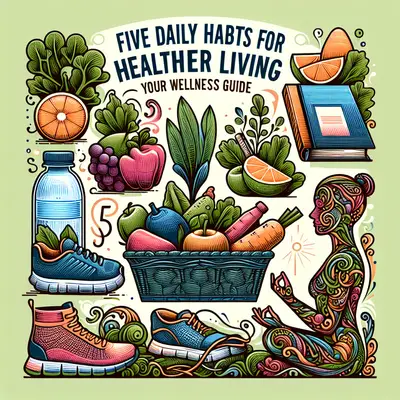

Small, steady choices can gently reshape how you feel in your body, your home, and your mind. You don’t need a perfect routine, a new planner, or a 5 a.m. wake-up call to care for yourself. You only need a few grounded daily habits that fit the life you’re actually living.
Think of these practices as soft threads you can weave into your day—flexible, forgiving, and easy to return to when life gets busy. Each one is meant to be realistic, kind, and adaptable, so you can build a rhythm of wellness that supports you rather than pressures you.
Beginning the Day With One Intentional Pause
Before the messages, the news, and the to‑do lists arrive, give yourself one simple pause. It doesn’t need to be long or elaborate; it only needs to be yours. This might be sitting on the edge of your bed and placing a hand on your heart, standing by a window and noticing the sky, or taking three unhurried breaths in the bathroom before the day fully starts.
That pause gently signals to your nervous system that you’re allowed to arrive in your own time. Physiologically, even a minute of slow breathing can reduce heart rate and support your body’s stress response. Emotionally, this small ritual reminds you that you are a person first, and a responder to everyone else’s needs second.
If you like structure, you can silently ask yourself one question in this moment: “What do I need more of today?” The answer might be water, rest, movement, quiet, or connection. Let that answer guide one small choice you make, rather than trying to redesign your whole day. Over time, this morning pause becomes a steady anchor, not another task to complete.
Nurturing Your Body With Gentle Hydration and Food Rhythm
Your body is quietly working for you all day—circulating blood, repairing cells, digesting food. One of the kindest ways to support that work is with steady hydration and a gentle rhythm of nourishment. Instead of chasing perfection (“clean eating,” strict rules, or guilt), think in terms of caring consistency.
You might start your day by drinking some water before coffee, or keeping a glass or bottle where you naturally spend time—by the sink, on your desk, or near your favorite chair. Many people find that tying hydration to existing habits (a few sips every time you return from the bathroom, finish a meeting, or complete a task) makes it easier to remember.
For food, notice how you feel when you go long stretches without eating versus when you have regular meals and snacks. Stable blood sugar tends to support steadier energy and mood, while extreme swings can leave you irritable, foggy, or exhausted. Instead of overhauling your entire way of eating, experiment with one supportive tweak: adding a source of protein to breakfast, keeping a nourishing snack (nuts, fruit, yogurt, hummus, or leftovers) nearby, or planning one balanced meal you can repeat during the week.
Approach this with curiosity, not criticism. Your body’s signals—hunger, fullness, thirst, fatigue—are not inconveniences; they’re conversation starters. Listening and responding, even in small ways, is a powerful daily act of wellness.
Caring for Your Nervous System With Tiny Movement Breaks
You don’t need a gym membership or a 60‑minute workout to receive the benefits of movement. In fact, sprinkling tiny movement breaks throughout your day can be just as meaningful, especially when life feels full. Think of movement as nourishment for your joints, muscles, heart, and mind rather than punishment or a chore.
These breaks can be surprisingly simple: standing up every hour to stretch your arms overhead, rolling your shoulders a few times between emails, walking up and down a hallway, or taking a 5‑minute walk outside if possible. Even light activity helps blood flow to your brain, supports heart health, and can ease feelings of tension or restlessness.
If you spend much of your day seated, try pairing movement with something that already happens regularly—like stretching during TV commercials, pacing gently while on a phone call, or doing a few calf raises while you wait for water to boil. Small, frequent movements help counteract the strain of long sitting without demanding a big time commitment.
Most importantly, choose movement that feels kind to your body. Some days that might be a short yoga video, a quiet walk, or slow stretching before bed. Other days, it might simply be changing positions more often. Let movement be an expression of care, not an obligation to “fix” yourself.
Protecting Your Energy With Simple Boundaries Around Screens
Screens connect us, inform us, and entertain us—but they can also easily drain us. Without gentle boundaries, your attention can feel scattered, your sleep disrupted, and your nervous system over-stimulated. You don’t need a complete digital detox to feel better; often, a few small shifts make a noticeable difference.
One approachable habit is choosing a “soft landing” and a “soft exit” from your day: aiming for a short period after waking and before sleeping where you step away from your phone. Instead of scrolling first thing, you might drink your morning beverage in quiet, stretch, or open a window. At night, you might read a few pages of a book, write down three things you’re grateful for, or do a brief breathing exercise.
You can also experiment with gentle limits during the day: placing your phone in another room for focused work, turning off non‑essential notifications, or designating certain check‑in times for email or social media. These practices are not about rigid rules, but about reclaiming pockets of calm and mental space.
If you notice feelings of comparison, anxiety, or urgency after scrolling, that’s valuable information. It doesn’t mean you’re weak; it means your brain is responding to constant input. Offering yourself small breaks is a way of protecting your mental and emotional energy so you can show up more fully in your offline life.
Preparing for Rest With an Evening Wind‑Down Ritual
Sleep is one of the most powerful, natural healers—supporting memory, mood, immune health, and emotional balance. Yet modern life often treats sleep as optional or negotiable. While you can’t control every factor that impacts your rest, you can create a gentle wind‑down ritual that invites your body into a state of “it’s safe to relax now.”
Start by choosing a rough “start time” for winding down, rather than fixating on a perfect bedtime. About 30–60 minutes before you’d like to be asleep, begin shifting into quieter activities. This might look like dimming lights, lowering the volume of music or TV, and doing something soothing: light stretching, skincare, journaling, tidying a small area, or making tomorrow’s to‑do list so your mind doesn’t have to hold it all.
Your body responds to cues of consistency. Repeating a similar pattern most nights helps train your nervous system to recognize, “This means rest is coming.” If possible, keep your sleep space as comfortable and inviting as you can manage—cooler temperature, minimal bright light, and sheets or blankets you enjoy.
When sleep is difficult, approach yourself with tenderness rather than frustration. Even if you can’t fall asleep right away, simply resting with your eyes closed, practicing slow breathing, or listening to calming audio can be restorative. The goal isn’t perfect sleep; it’s showing your body, night after night, that rest is valued and welcomed.
Conclusion
Wellness doesn’t have to arrive in sweeping life changes. It often grows quietly from small, repeatable choices: a pause before your day begins, a glass of water within reach, a short stretch between tasks, a few minutes away from your phone, a gentle ritual before bed.
You don’t need to adopt every habit at once. Choose one that feels doable this week and let it settle into your days. When it starts to feel natural, you can add another, or simply deepen the one you have.
Most of all, remember that there is no “perfect” way to care for yourself—only the next kind step. Your body and mind are always doing their best with what they have. These daily habits are simply ways of saying, “I’m here to support you,” one small moment at a time.
Sources
- National Institutes of Health – “Stress and Your Health” – Overview of how stress impacts the body and the role of relaxation in health
- Harvard T.H. Chan School of Public Health – “Healthy Drinks” – Evidence-based guidance on hydration and beverage choices
- U.S. Department of Health & Human Services – Physical Activity Guidelines – Recommendations on physical activity and the benefits of light, regular movement
- Centers for Disease Control and Prevention – “Sleep and Sleep Disorders” – Information on the importance of sleep for overall health and functioning
- Harvard Medical School – “Blue Light Has a Dark Side” – Research-backed explanation of how evening screen use can affect sleep and circadian rhythms
Key Takeaway
The most important thing to remember from this article is that this information can change how you think about Daily Habits.